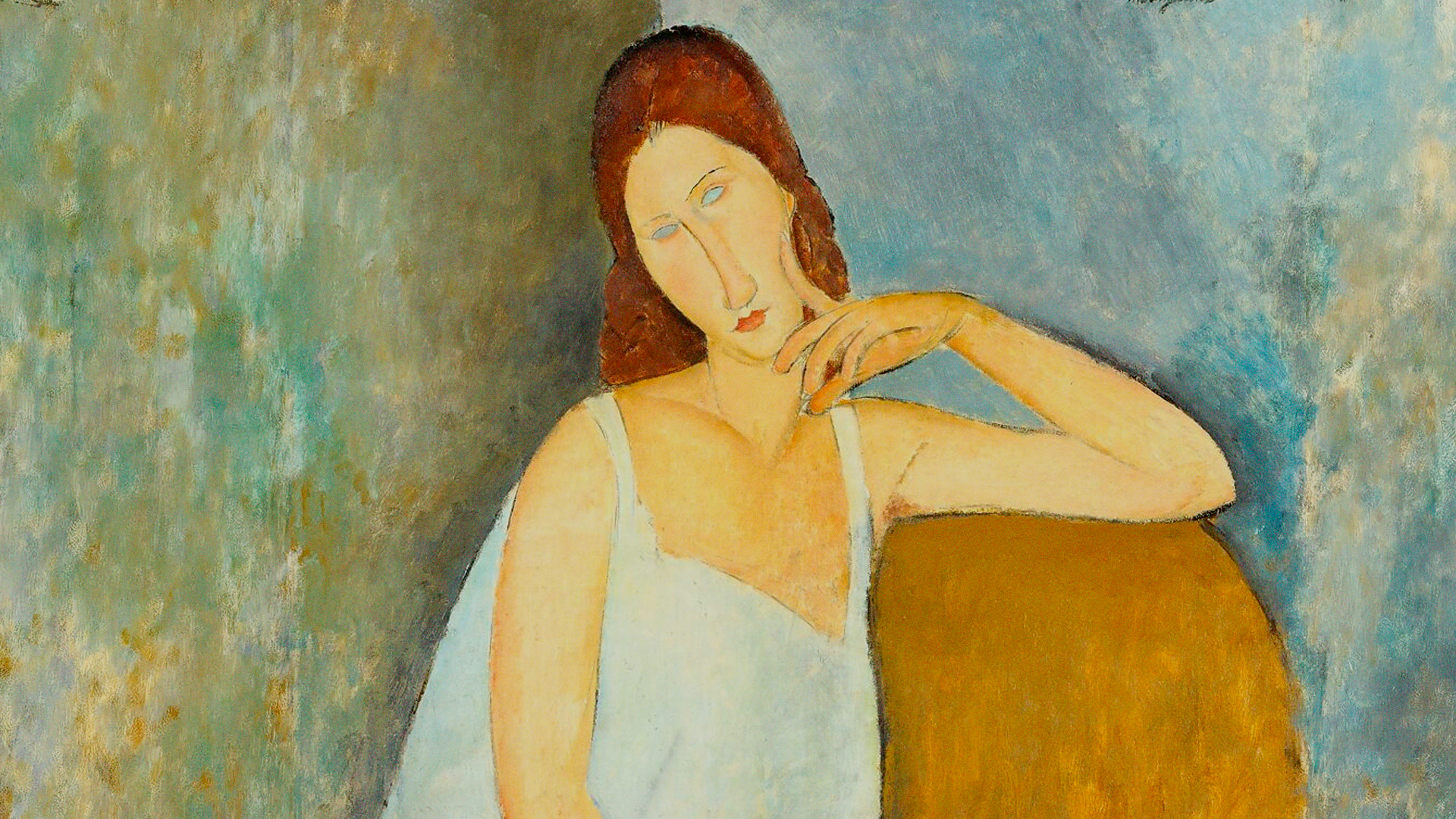
There is something unsettling about looking into a portrait by Amedeo Modigliani. The face is right there, close enough to recognise its features, yet something remains beyond our reach. The neck is elongated, the face simplified into graceful curves, and the eyes often appear strangely empty. We can see the person, but we cannot quite meet their gaze.
Why did Modigliani paint so many eyes without clearly defined pupils? The answer may have less to do with what he left out than with what he wanted us to see.
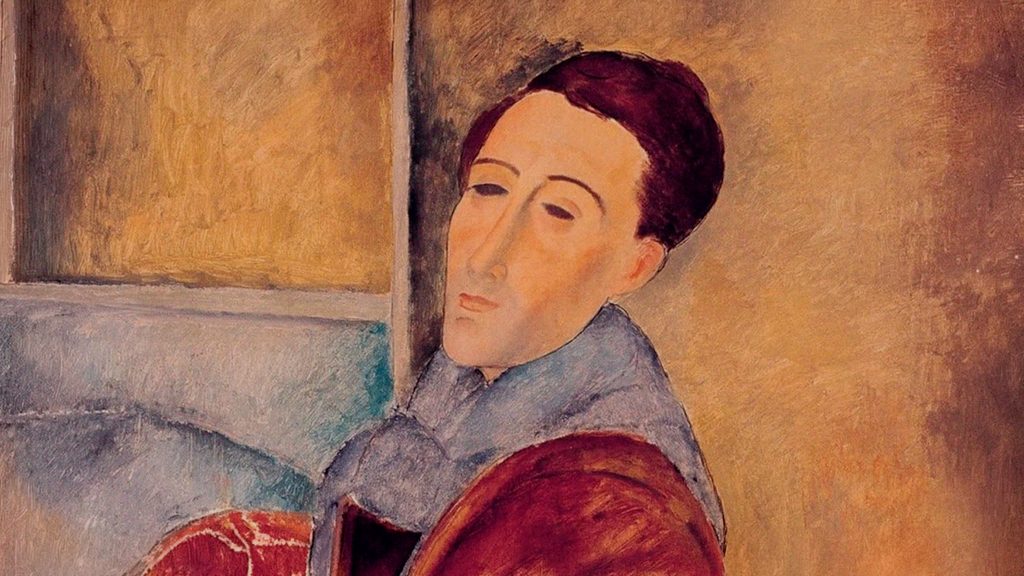
In his portraits, Modigliani’s eyes become a threshold between recognising a face and knowing the person behind it. They create a space between the viewer and the sitter, between outward appearance and inner life. And when the artist does give his figures a more defined gaze, that distance can suddenly feel different.
To understand this effect, we must look beyond the legend of the artist and pay attention to the quiet decisions he made on the canvas.
The famous story behind Modigliani’s eyes
A story has followed Modigliani for generations. When asked why he sometimes left his subjects’ eyes without pupils, he is said to have replied:
“When I know your soul, I will paint your eyes.”
It is a beautiful sentence. It suggests that painting a person requires something more than observing their appearance: an understanding of who they are, something that might emerge only through time, trust or intimacy.
But there is an important distinction between a compelling story and a documented fact. The quotation is widely attributed to Modigliani, yet its exact wording and original source are not securely established. It is best approached as a piece of artistic folklore rather than a statement we can confidently treat as a verbatim historical record.
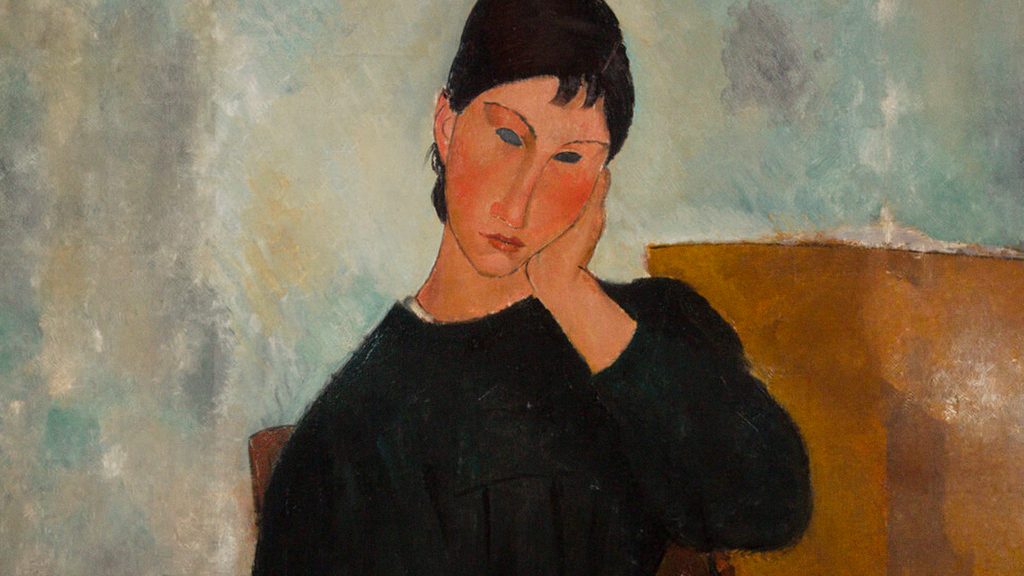
That uncertainty does not make the story less interesting. If anything, it invites a better question: why does the idea feel so perfectly suited to his paintings?
Perhaps because Modigliani understood something that portraiture has always struggled with. A face can be observed, measured and reproduced. A person is another matter.
The eyes seem to promise access to that hidden dimension. We look into them expecting to find evidence of thought, emotion and identity. When that familiar promise is interrupted, we become more conscious of the mystery it was supposed to resolve. Modigliani’s portraits make that interruption visible.
More than empty eyes: a different way of seeing
Born in Livorno, Italy, in 1884, Modigliani moved to Paris in 1906, joining an international community of artists who were questioning the conventions of modern painting. Although he encountered the avant-garde movements of his time, he developed a distinctive figurative language of his own.
His portraits are instantly recognisable. Faces become elongated ovals, necks stretch into elegant lines, and noses and mouths are reduced to carefully placed shapes. Figures often seem calm and still, almost as though they belong to a world slightly removed from our own.
These features were not simply decorative mannerisms. Modigliani drew on a variety of artistic traditions, including Italian Renaissance painting, the work of Paul Cézanne and forms of African and Egyptian art. He used these influences to move away from straightforward naturalism towards a more personal interpretation of the human figure.
The eyes are central to this transformation.
It is tempting to describe them as unfinished, as though Modigliani had stopped painting before reaching the most expressive part of the face. Yet many of his portraits have carefully constructed eyelids, contours and coloured surfaces. What is often reduced or omitted is the pupil, the detail that helps establish the direction and focus of a gaze.
That distinction matters.
An eye without a clearly defined pupil does not necessarily look incomplete. Instead, it can seem detached from the ordinary business of looking. The figure is present, but its attention remains elusive. We cannot always tell whether it is watching us, looking past us or absorbed in a thought we cannot share.
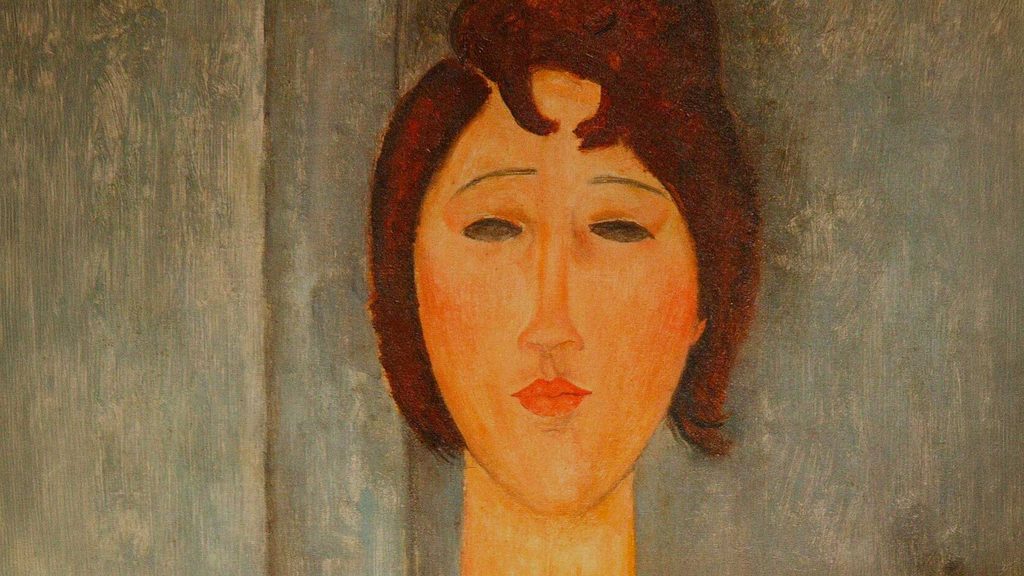
As the National Gallery of Art’s account of Modigliani notes, his distinctive portraits are known for their elongated necks and blank, staring eyes. But the effect of those eyes cannot be understood in isolation. It emerges from the entire composition: the stillness of the figure, the simplified features and the deliberate way the face is constructed.
The result is not an absence of expression. It is a different kind of expression.
A portrait can reveal a face without revealing a person
For centuries, portraiture served many purposes. It could record a person’s appearance, preserve their memory, communicate their social position or project an image they wanted the world to see.
A portrait was never merely a likeness. It was also a relationship between the person being painted and the person doing the painting. Modigliani takes this relationship somewhere unusual.
His subjects are rarely presented as theatrical personalities caught in a dramatic moment. They sit or stand in a state of apparent stillness. Their gestures are restrained, their surroundings often simplified, and their faces are stripped of many of the details that would ordinarily help situate them in the world.
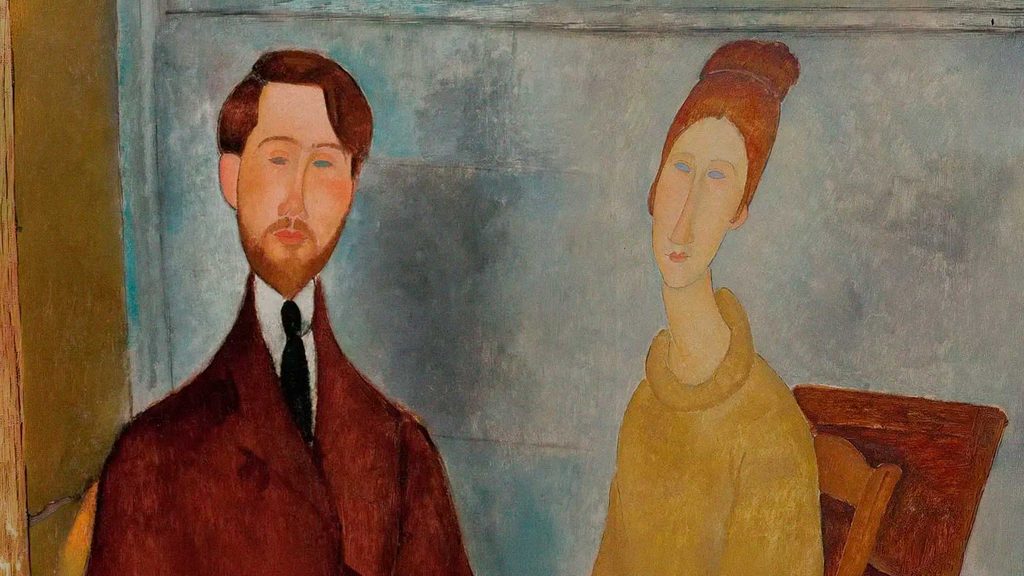
Modigliani painted friends, fellow artists, writers and people who inhabited the artistic circles of Paris. His sitters remain individual presences, even when their features are transformed by his characteristic style.
This is where his portraits become particularly compelling. He does not abandon recognition, but neither does he allow recognition to become the whole experience.
We can identify the shape of a face without knowing what the person thinks. Or study someone’s expression without understanding their feelings. And we can look directly at another human being and still remain strangers. Modigliani’s eyes make that distance difficult to ignore.
Their apparent emptiness creates room for introspection. Rather than telling us precisely what a subject feels, they invite us to confront our own desire to find an answer. We search the face for clues, looking for an emotion we can name or a story we can complete. Sometimes, the painting gives us no definitive answer.
Perhaps that is precisely the point. The sitter’s inner life does not become available to us simply because their face has been placed in front of us. The portrait can bring us close without granting us access.
When Modigliani gives his figures a gaze
Of course, Modigliani did not always leave the eyes without clearly defined pupils. Some portraits feature more explicit, focused gazes, while others retain the ambiguous, almost opaque quality for which he became famous.
This variation is important because it challenges the idea that he followed a strict rule: blank eyes for strangers, painted pupils for people whose souls he understood.
There is no sound basis for treating the anecdote as a universal formula governing his portraits. The way he rendered the eyes varied from work to work, and the portraits do not divide neatly into two categories according to the intimacy of his relationships with their sitters. Still, the contrast remains fascinating.
The portrait of Chaim Soutine
Consider Chaim Soutine, painted in 1918 and now held by the National Gallery of Art in Washington. Here, Modigliani gives the eyes dark pupils and a half-closed, slightly uneven quality. The result is a gaze that seems directed outward, towards the viewer, even as it remains difficult to read.
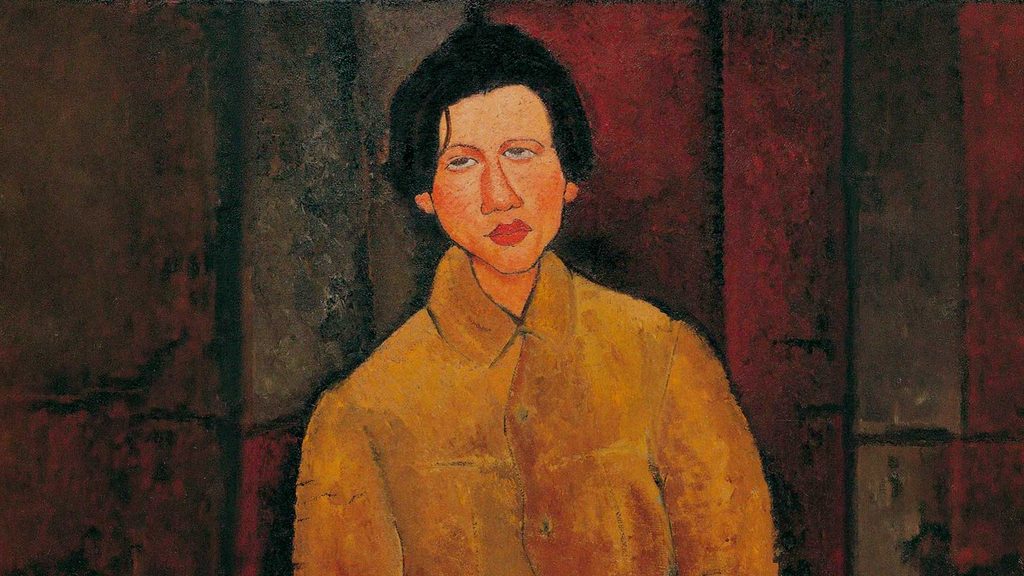
The National Gallery notes that, while many of Modigliani’s portraits are stylised and impersonal, with the eyes often left blank, this painting feels both particular and sympathetic. Soutine’s posture, rumpled clothes and uneven eyes give the portrait a psychological immediacy that many of the artist’s other sitters do not possess.
When the eyes acquire greater definition, the encounter can feel more immediate. There is a stronger sense of another person looking out from the painted surface.
But this does not mean that the figure becomes entirely knowable. A clearly painted gaze can establish contact without explaining what lies behind it. We might feel closer to the subject, yet the mystery of the person remains.
The distinction, then, is not between a portrait that has a soul and one that does not. Nor is it proof that Modigliani reserved a fully painted gaze for those he loved. It is a difference in how the painting organises our attention.
When the gaze is ambiguous, we are encouraged to look inward, searching for meaning. When it becomes more defined, the possibility of an encounter seems to open up.
One makes us dwell on the limits of what we can know. The other reminds us of the strange immediacy of looking at another person. Both can leave us wondering who, exactly, we are seeing.
The silence between two people
There is a reason Modigliani’s portraits remain so recognisable today. Their appeal does not depend on knowing the biography of every sitter, understanding the art movements of early twentieth-century Paris or memorising the influences behind his style. Their emotional language is immediate.
We recognise the experience of being close to someone without fully understanding them. We know what it feels like to search another person’s face for reassurance, to mistake a visible expression for a reliable explanation of what someone thinks, or to realise that even the people we love retain an inner world that belongs to them alone.
Modigliani’s paintings give form to that experience. Their elongated faces and simplified features seem to hold their subjects in a state of suspension. The people in these portraits are neither entirely distant nor completely available. They occupy a space between presence and mystery.
And the eyes intensify that sensation. They remind us that intimacy is not the same as access. Knowing someone’s appearance is not knowing their thoughts. Sharing a life with another person does not mean possessing a complete map of their inner world.
Perhaps this is why the famous anecdote has endured, regardless of whether Modigliani ever uttered those precise words. It captures a tension at the heart of his art: the desire to see deeply into another person, and the recognition that some part of them will always remain beyond our reach.
The silence of the eyes is not necessarily a sign that something is missing. It may be what allows the rest of the face to speak. And when we stand before a Modigliani portrait, we are left with a question that extends far beyond painting.
What does it really mean to see another person?