In the late 19th century, while modern art was taking shape in Paris, one woman changed the way we see the female body. Suzanne Valadon (1865–1938) started out as a model for big names like Renoir, Toulouse-Lautrec, and Puvis de Chavannes. But then she picked up a brush and became a painter in her own right. In fact, she didn’t just enter the art world. She changed its idea of beauty from the inside.
This is how her choices as a woman, model and artist shifted modern art’s gaze forever. And how them let the modern woman appear on canvas as a subject, not an object.
From Model to Painter: A Bold Act of Self-Definition
Suzanne Valadon was born Marie-Clémentine Valade in 1865. She was the illegitimate daughter of a laundress and grew up in a small town in central France before moving to Paris. Her early life was far from easy. Life was tough: money ran short, society judged her harshly, and working-class women in the Second Empire and early Third Republic had very few options.
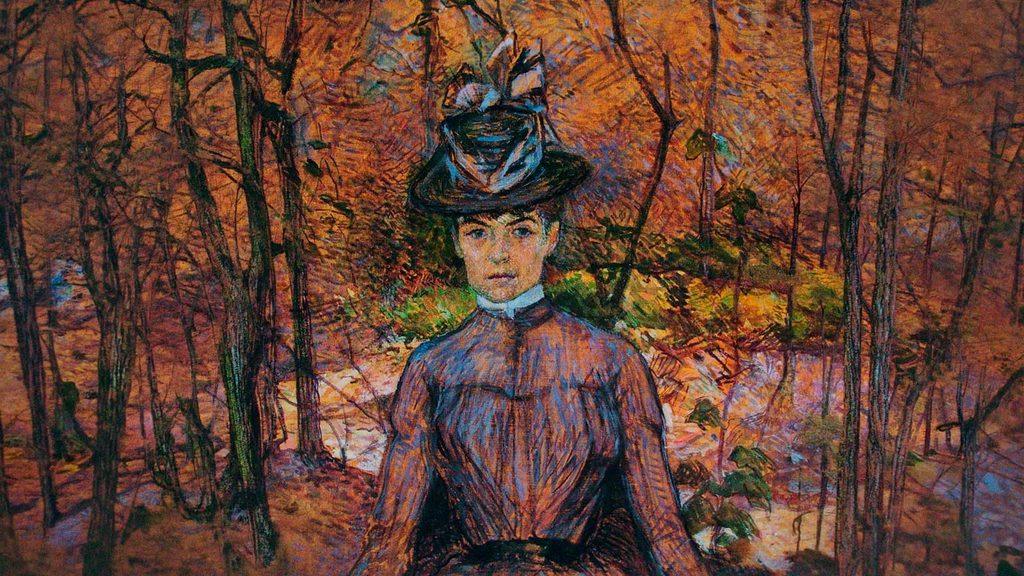
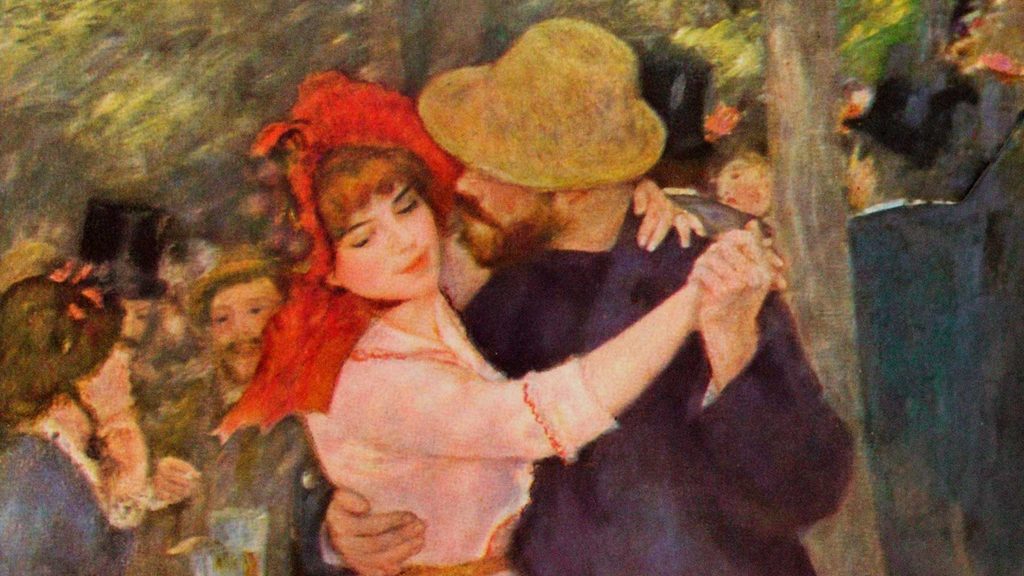
Before she ever became a professional painter, she was one of the most painted women of her time. She posed for Pierre-Auguste Renoir, for Puvis de Chavannes and for Henri de Toulouse-Lautrec, among others. In the art world of the 19th century, the model’s body was raw material. It was essential, but nobody really saw the person behind it.
Valadon’s first radical move was to say no to that invisibility. She learned to draw and paint mostly on her own, with the encouragement (and scrutiny) of Edgar Degas. He saw her talent early on. In 1894, she became the first woman the Société Nationale des Beaux-Arts admitted, kicking open a door that had stayed shut for women for a long time.
This shift is more than just a biographical detail. It’s a powerful act of self-definition. The 19th-century art system wanted her to be a muse. Valadon decided to be the author instead. She took the very position that had objectified her, with people looking at her, posing her, and arranging her, and turned it into a place from which she could look back.
Painting the Nude from a Woman’s Point of View
The female nude had long been one of the biggest battlegrounds in Western art. From Titian’s Venus to Ingres’s odalisques and Manet’s Olympia, artists used the naked woman as the main way to talk about beauty, desire and morality.
Valadon stepped into this tradition with a key difference. She painted the nude from the lived experience of having been a model herself. She knew exactly what it felt like when someone arranged her, exposed her, and interpreted her. That knowledge shows up in every line.
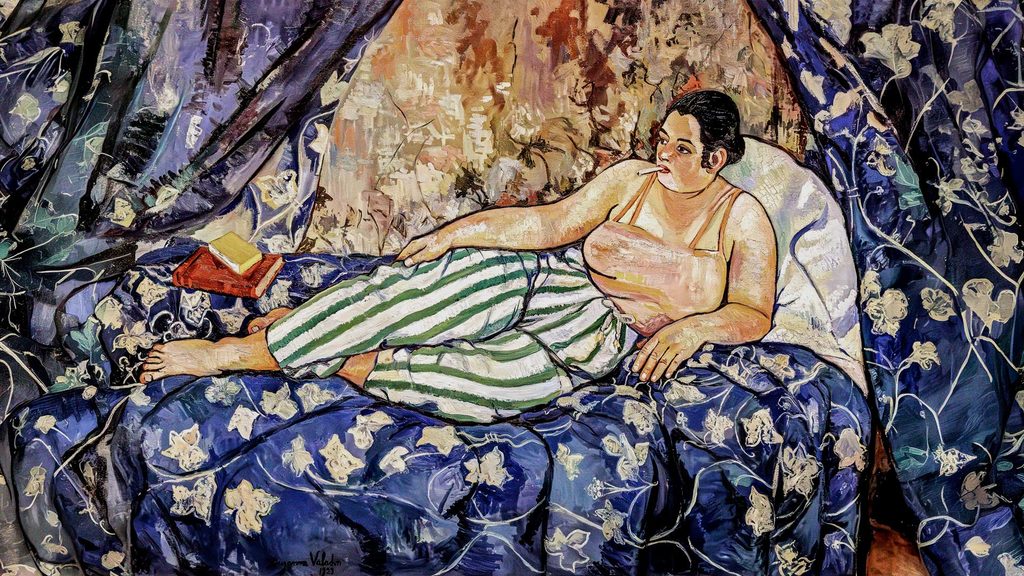
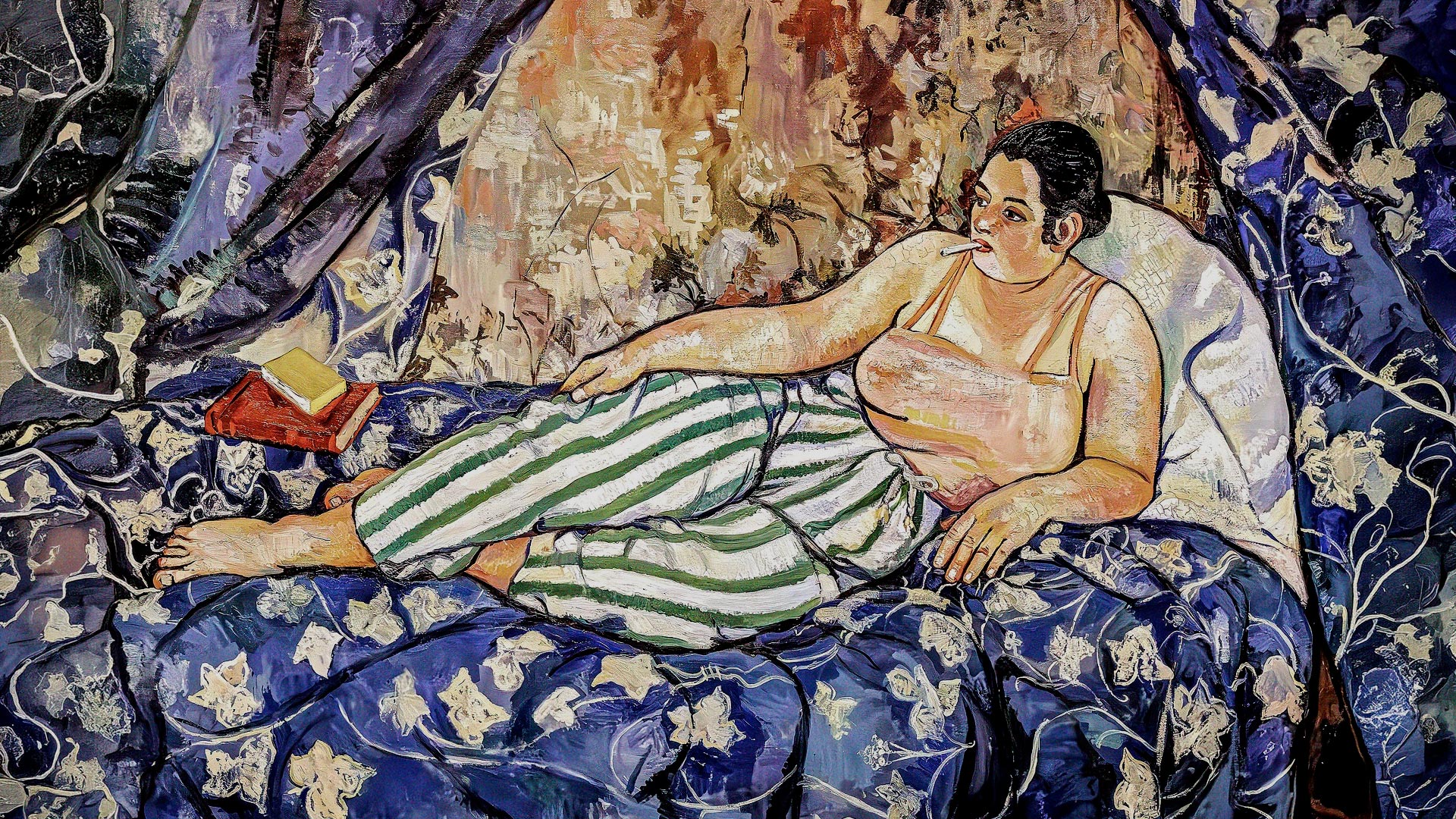
In paintings like The Blue Room (1923), Reclining Nude (1928), and other nudes from the 1900s and 1910s, her women are not idealized goddesses posed for our pleasure. They sit, lean, fold into themselves, or just hang out in domestic spaces. Their bodies have weight. You can see hips, bellies, rolls of flesh, and real skin.
While academic painters and many modern male artists smoothed, stretched, and eroticized the female form, Valadon emphasized contour, volume, and the unglamorous truth of the body. She even painted pubic hair at a time when it was almost always erased from female nudes as “indecent.” This wasn’t just a style choice. It was a statement: beauty doesn’t need reality to be airbrushed away.
Feminist art historians have argued about whether Valadon fully “subverted” the male gaze or stayed tangled up in it. But even the most cautious readings agree on one thing. Her nudes introduce a different way of looking. The woman in her paintings is less an object of desire and more a subject with her own inner life. She’s often absorbed in her own world, reading, resting, or thinking, instead of performing for the viewer.
In this sense, Valadon helped separate female beauty from availability. Her nudes suggest that a woman’s body can be central to art without being reduced to a tool for male pleasure.
Real Beauty vs. Ideal Beauty: A New Look for the Modern Woman
Valadon’s redefinition of beauty is tied to her social context. The late 19th and early 20th centuries saw the rise of the “modern woman“. And what did this mean? Working women, urban, more visible in public life, and slowly gaining new forms of independence. But visual culture was slower to catch up. Paintings and popular images kept pushing narrow ideals: the virgin, the nurturing mother or the seductive courtesan.
Valadon’s women don’t fit these molds. They’re not saints or sirens. They’re regular women doing regular things: drying off after a bath, fixing their hair, or sitting on a bed lost in thought. In The Abandoned Doll (1921), for example, a young nude sits while an older woman stands behind her. It’s an image full of transitions between girlhood and womanhood, innocence and experience, without any moralizing.
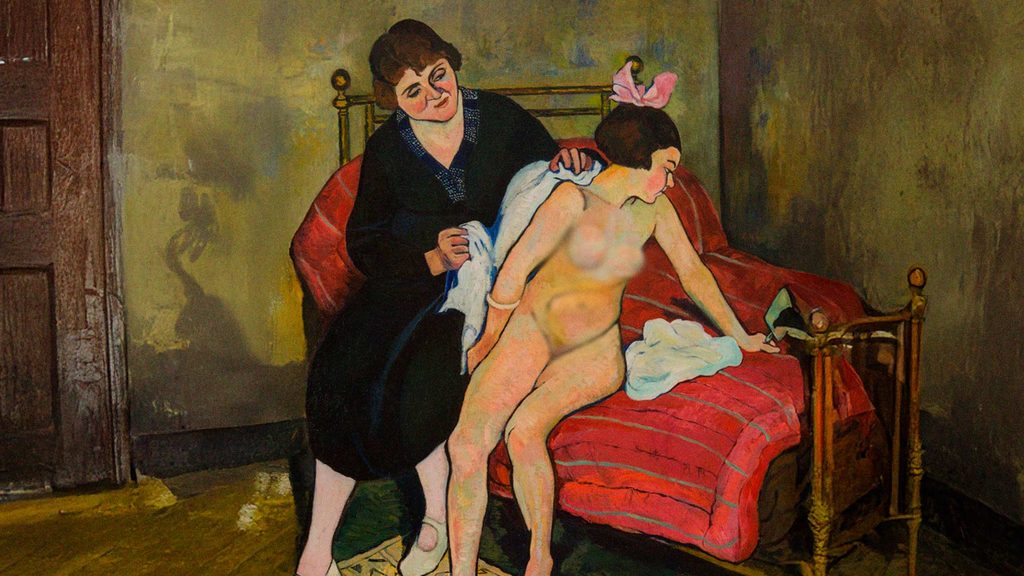
Her self-portraits take this idea even further. She paints herself as someone who has lived, worked, loved, and aged. In a culture that equated female beauty with youth, this was a quiet but powerful act of rebellion. For Valadon, beauty is about continuity, not expiration.
By insisting on bodies that are specific instead of generic, aged instead of eternally young, and engaged in daily life instead of staged as fantasy, Valadon proposed a new aesthetic for the modern woman. Her work suggests that real beauty lies in authenticity: in the courage to show up as you are, not as you’re supposed to be.
The Male Nude Through a Female Gaze
If her female nudes challenged tradition, her male nudes turned it upside down. In works like Adam and Eve (1909) and especially Casting the Net (Le Lancement du filet, 1914), Valadon painted naked men with the same honesty that male artists had long reserved for women.
Casting the Net shows three nude men pulling a fishing net from the water. Their bodies are tense with effort, and their genitals are clearly visible. The composition echoes classic scenes of heroic male labor, but the perspective is completely different. These men are being looked at, not doing the looking. They’re on display, not in control.
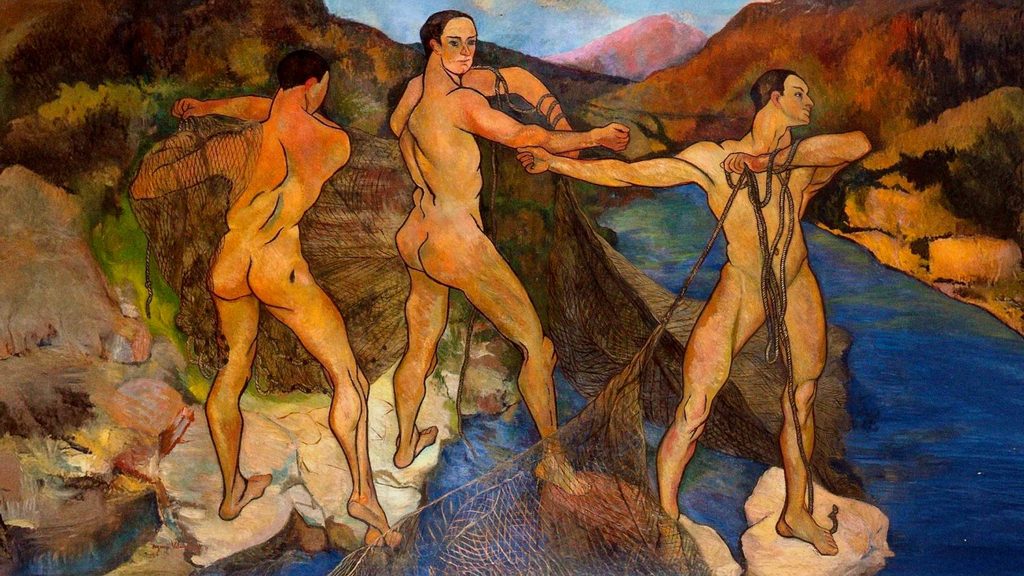
For a woman painter in the early 20th century, this was a huge reversal. It put the male body in the position that artists had traditionally given to the female: open to the gaze, defined by physicality, and stripped of narrative armor.
Philosophically, this move shows how arbitrary the old order really was. If the male body can be “the nude,” then the female body doesn’t have to be the only site of visual vulnerability.
This reversal does more than just shock. It shakes up the hierarchy that had organized beauty and power in Western art. By painting men as objects of looking, Valadon makes a subtle but powerful point: no body is naturally a “subject” or an “object.” These roles are constructed, and they can be changed.
The Importance of Suzanne Valadon in the Modern World
Valadon’s impact wasn’t immediate in the way that Picasso‘s or Matisse‘s was. She worked in the shadow of the male avant-garde, galleries often exhibited her separately, and for a long time critics treated her as a curious footnote: “the model who became a painter”. But over time, her significance has become clear.
Today, people recognize her as one of the most important early modern women artists, a pioneer who opened space for later generations to represent female experience without apology. Contemporary painters like Jenny Saville, with their monumental, unidealized bodies, and artists like Tracey Emin, with their raw self-representation, stand in a line that leads back to Valadon’s uncompromising vision.
More broadly, her work anticipated key concerns of feminist art and visual culture: who looks, who people look at, whose bodies count as beautiful, and whose stories deserve telling. By centering real women, with wrinkles, weight, daily routines, and aging, she helped shift the horizon of what art could consider worthy of representation.
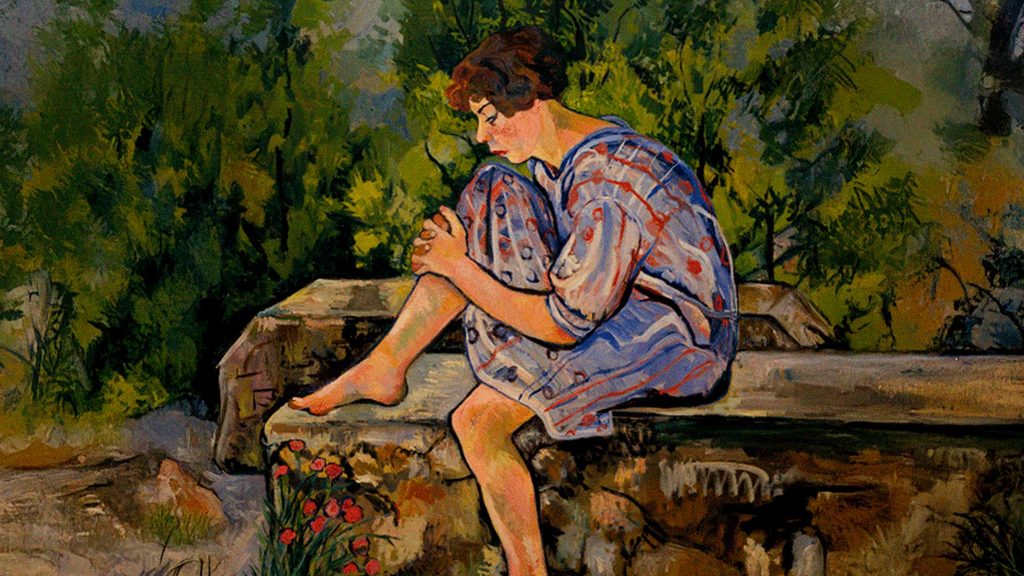
For the modern woman, Valadon’s legacy is both aesthetic and existential. She offered an image of femininity that doesn’t depend on perfection, youth, or male approval. In her paintings, beauty is not a mask but a way of telling the truth: a way of saying, “This body, this life, right here, is enough.”
Why Suzanne Valadon Matters Today
In an era still flooded with retouched images, algorithmic ideals, and narrow standards of attractiveness, Valadon’s project feels more relevant than ever. Her insistence on painting bodies as they really are, marked, specific, and lived-in, offers a counter-model to the endless pursuit of flawlessness.
Philosophically, her work invites us to rethink beauty not as conformity to an external standard, but as fidelity to one’s own reality. For artists, she’s a reminder that the gaze can be reclaimed. For viewers, she’s a reminder that looking can be an act of recognition, not just consumption.
Suzanne Valadon didn’t just redefine real beauty. She expanded the very category of who gets to embody it. In doing so, she helped change not only the history of art, but the image of the modern woman within it.