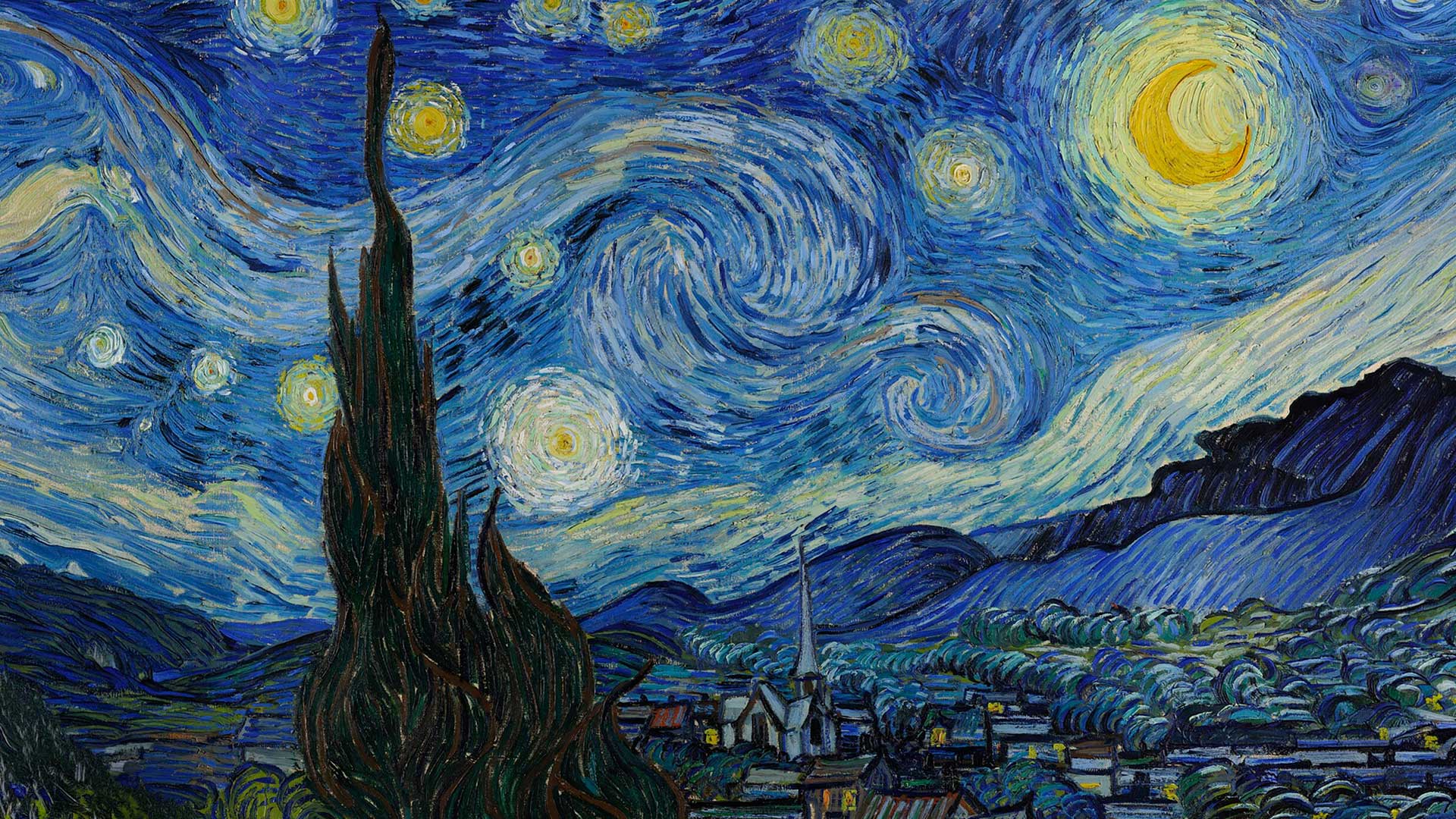
Most of us think of night as the moment when the world loses its colours. The sun disappears, familiar streets become unfamiliar, and the things we could see so clearly a few hours earlier begin to dissolve into shadow. For Vincent van Gogh, however, night offered something entirely different. It was not the absence of light, but another way of seeing the world.
In September 1888, while living in Arles in the south of France, Van Gogh wrote to his brother Theo that the night seemed “much more alive and richly coloured than the day”. It was not simply a poetic observation. It was an artistic conviction that would lead him to create some of the most extraordinary nocturnal paintings in the history of art.
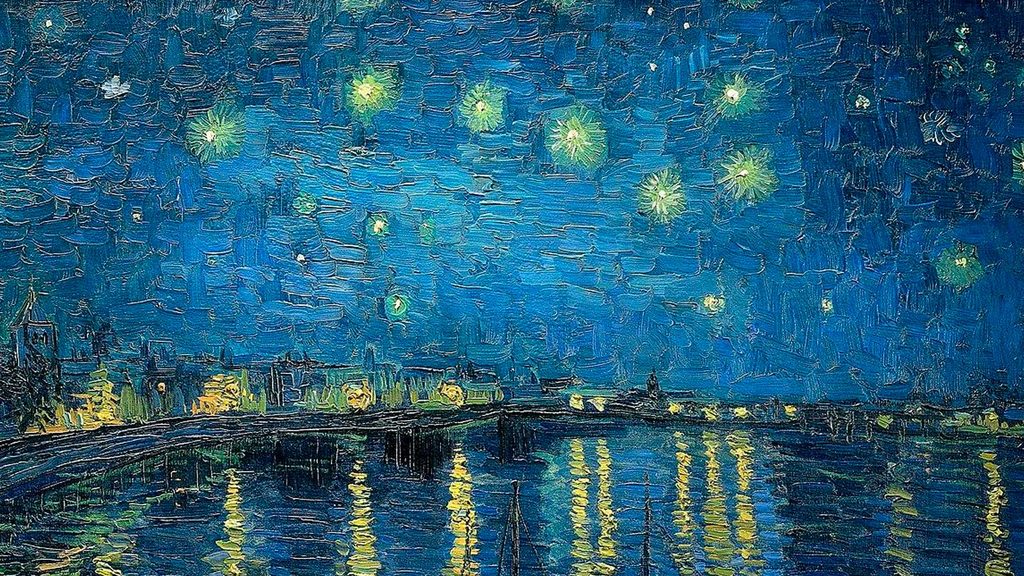
Van Gogh’s night paintings reveal a world made of electric yellows, deep blues, unexpected greens and violent reds. Stars become sources of energy, street lamps transform ordinary streets into theatrical stages, and even the darkest interiors seem to vibrate with colour. Through them, Van Gogh discovered that darkness had a language of its own.
A painter who wanted to capture the night
By the time Van Gogh arrived in Arles in February 1888, he had already spent two years in Paris, where he encountered the work of the Impressionists and Neo-Impressionists. His palette had gradually moved away from the earthy browns and dark tones of his earlier Dutch paintings towards brighter, more expressive colours.
The south of France offered something new. The intense sunlight, colourful streets and Mediterranean landscape encouraged him to experiment with colour in ways he had never quite attempted before. Yet, surprisingly, it was not only the blazing afternoon sun that fascinated him. He became increasingly interested in what happened after sunset.
There was also a practical challenge. How could an artist paint the night without simply covering the canvas in black? Van Gogh wanted to observe nocturnal scenes directly, rather than rely on sketches made in the dark and completed later under daylight. He understood that the colours we remember and the colours we actually see are not necessarily the same.
Conversations with his sister, Willemien
In a letter to his sister Willemien in September 1888, he described his ambition with remarkable clarity: “Now there’s a painting of night without black.” He went on to explain how he wanted to use blue, violet and green, allowing the artificial light of cafés and street lamps to create unexpected combinations of yellow and green.
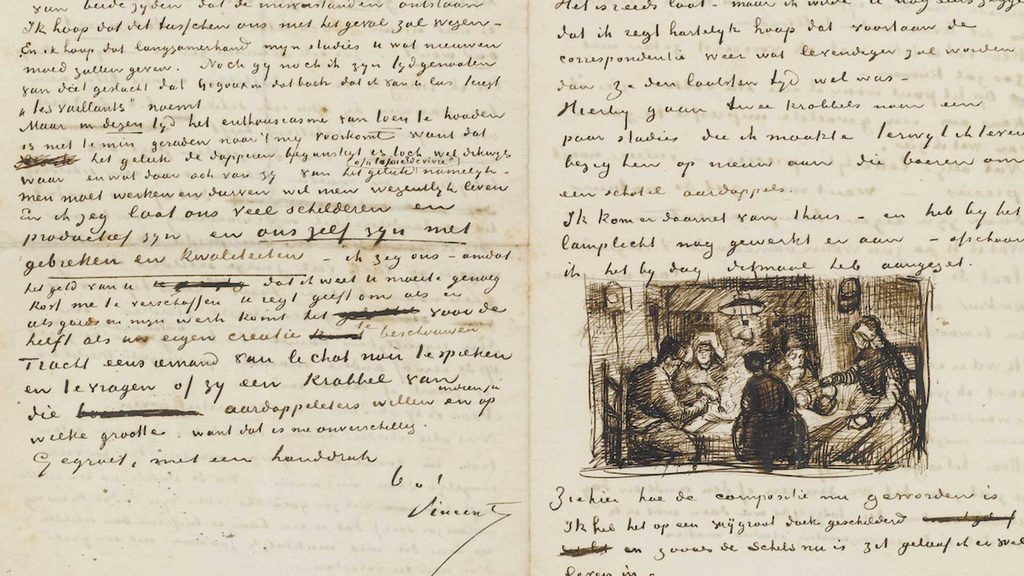
He even acknowledged the risks of working in darkness. Sometimes, he admitted, he might mistake a blue for a green or a lilac for a pink. Nevertheless, he preferred this uncertainty to the conventional representation of night as a black landscape illuminated by a weak, whitish light.
For Van Gogh, the challenge was not simply to reproduce what the eye could see. It was to understand what colour could make us feel.
The streets of Arles: when darkness becomes light
In September 1888, Van Gogh began exploring the possibilities of painting the night in a remarkable series of works. Among them were Café Terrace at Night and Starry Night Over the Rhône, two paintings that capture very different experiences of the same city.
Café Terrace at Night (1888)
What if the most beautiful thing about a night sky was not the darkness, but the light beneath it?
In Café Terrace at Night, Van Gogh takes us to the Place du Forum in Arles. A café terrace glows beneath a large yellow gas lamp, while the surrounding buildings disappear into deep blues and violets. Above them, a handful of bright stars punctuate the dark sky.
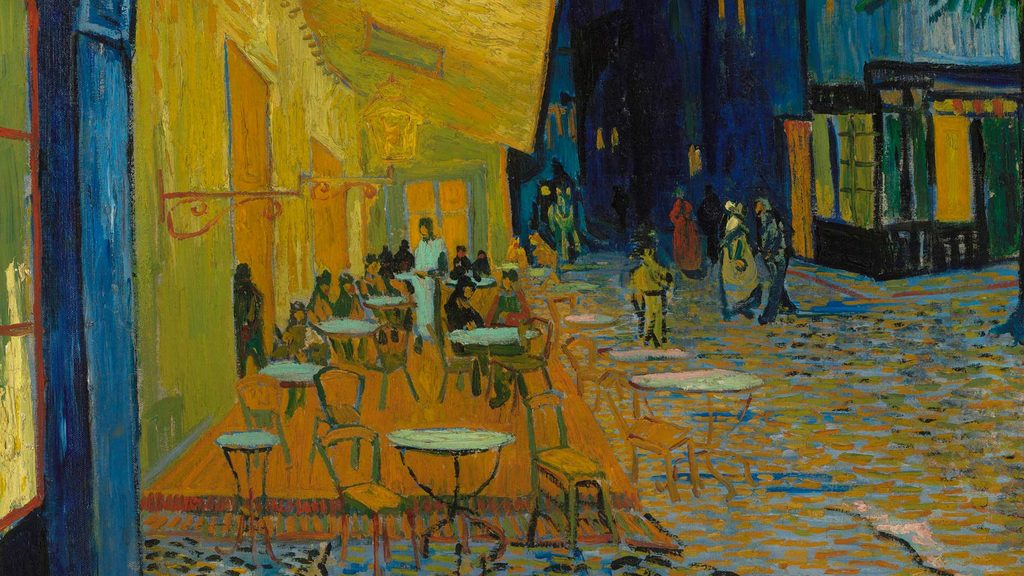
At first glance, the scene seems peaceful. People sit at tables, a waiter moves between customers and the street stretches quietly into the distance. Yet the real subject of the painting is not the café or the people. It is the relationship between two different kinds of light.
The gas lamp produces a warm yellow glow, while the night sky offers a cooler blue. These colours intensify one another, creating a visual tension that makes the entire scene feel luminous. The pavement even takes on a violet-pink tone beneath the artificial light.
Van Gogh was particularly pleased with this effect. In his correspondence, he explained how the abundance of yellow and orange gaslight could intensify the surrounding blue.
There is something rather modern about the scene. The café becomes a small island of human activity surrounded by an enormous universe. People gather to drink, talk and pass the evening, seemingly unaware of the stars above them.
Perhaps that is part of the painting’s charm. Van Gogh places the ordinary rituals of everyday life beneath an extraordinary sky. The universe does not interrupt the evening. It quietly accompanies it.
Starry Night Over the Rhône (1888)
Sometimes, the night is not something we look at. It is something we stand inside.
A few weeks later, Van Gogh turned his attention towards the Rhône River, also in Arles. In Starry Night Over the Rhône, the city lights reflect across the water, creating long golden streaks that seem to connect the buildings with the sky.
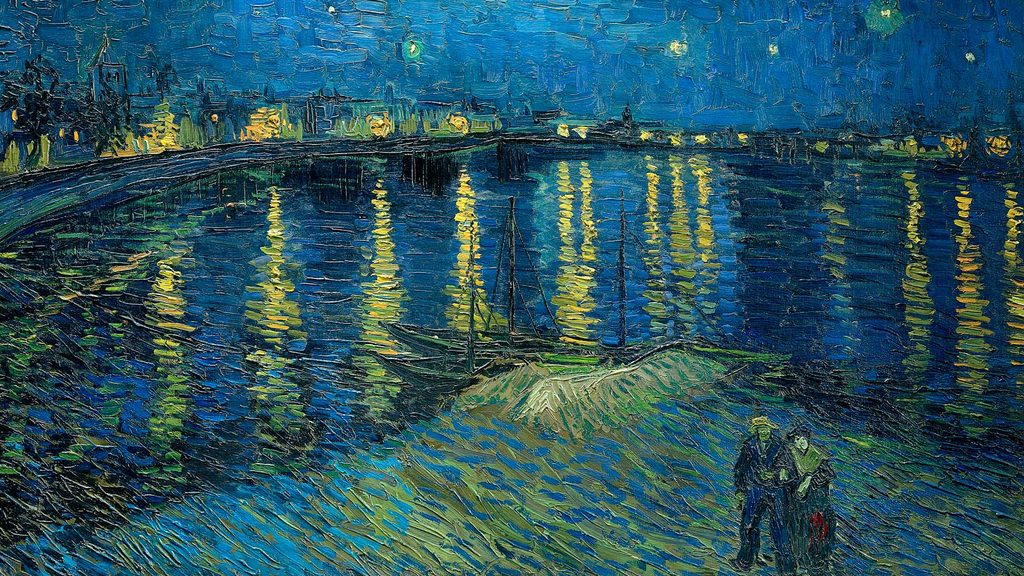
Unlike the café terrace, this painting feels quieter and more contemplative. Two small figures walk together in the foreground, while the immense sky stretches above them. The river becomes a mirror, reflecting the artificial lights of the city and the stars beyond it.
The colour relationships are extraordinary. Van Gogh combines Prussian blue, ultramarine and cobalt with intense orange and yellow reflections. Rather than using darkness to separate objects, he uses colour to connect them.
The result is almost romantic. The city seems to breathe beneath the stars, and the water carries its lights into the darkness. For a moment, the distinction between the earthly and the celestial becomes difficult to maintain.
It is worth remembering that Van Gogh painted this scene outdoors at night, using a gas lamp to illuminate his canvas. He wanted to capture the actual appearance of nocturnal light, not an approximation reconstructed from memory the following morning.
The Night Café: when darkness becomes uncomfortable
Not every night in Van Gogh’s world offered romance or contemplation. Some were lonely, unsettling and even frightening.
In September 1888, he painted The Night Café, an interior depicting the Café de la Gare in Arles. Unlike the peaceful terrace, this is a place where the night seems to have lost its charm.
The room is dominated by intense reds and greens. A green billiard table occupies the centre, surrounded by a floor that seems to tilt towards the viewer. Four yellow lamps hang from the ceiling, illuminating a handful of exhausted customers. Some figures sit silently, while others appear almost asleep.
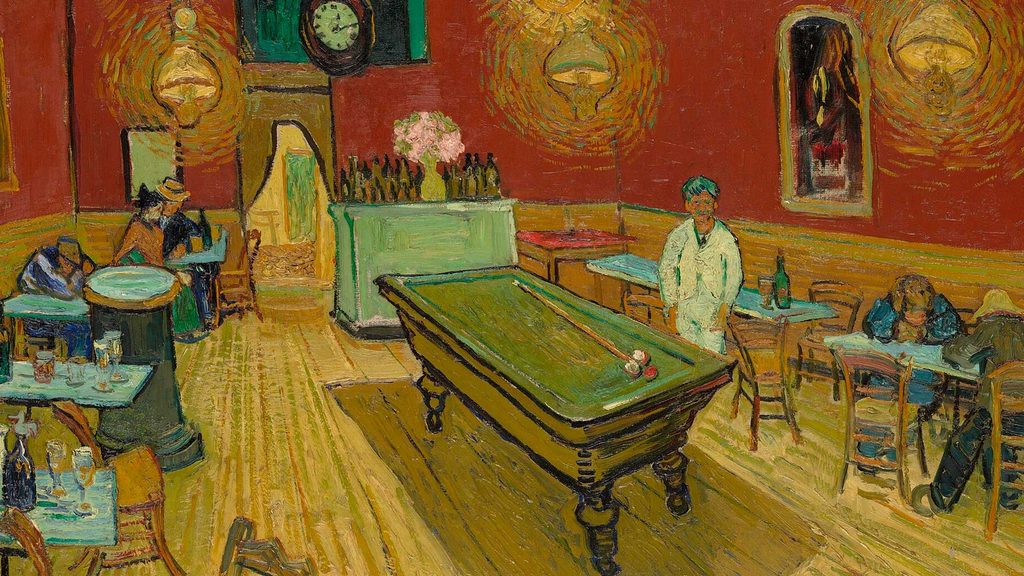
Van Gogh wanted to express what he called “the terrible passions of humanity” through the contrast between red and green. In another letter to Theo, he described the café as a place where one could “ruin oneself, go mad or commit a crime”.
He was not interested in painting an attractive interior. He wanted to capture the psychological atmosphere of a place where people spent the night drinking, escaping their problems or simply waiting for morning.
A painting from the night shift
Interestingly, Van Gogh spent three consecutive nights working on the painting, sleeping during the day. He later admitted that it was one of the ugliest paintings he had ever made, but that did not mean he considered it unsuccessful.
The colours do something remarkable here. Red and green, which can create a powerful visual harmony when carefully balanced, become almost aggressive in their intensity. The light does not comfort the people inside the café. It exposes their isolation.
This is perhaps one of the most fascinating things about Van Gogh’s relationship with night. He understood that darkness could contain completely opposite emotions. It could offer intimacy and wonder, but also loneliness, danger and despair.
The same night sky that makes two lovers feel small beneath the universe can also leave someone feeling terribly alone in a crowded room.
The Starry Night: when the night becomes a universe
What happens when we stop looking at the stars as distant objects and begin to imagine them as living things?
In June 1889, Van Gogh painted the work that would eventually become his most famous nocturnal vision: The Starry Night.
By this point, he was living at the Saint-Paul-de-Mausole asylum in Saint-Rémy-de-Provence, where he had admitted himself following a period of severe psychological distress. From his bedroom window, he could observe the surrounding countryside, the hills and the changing sky.
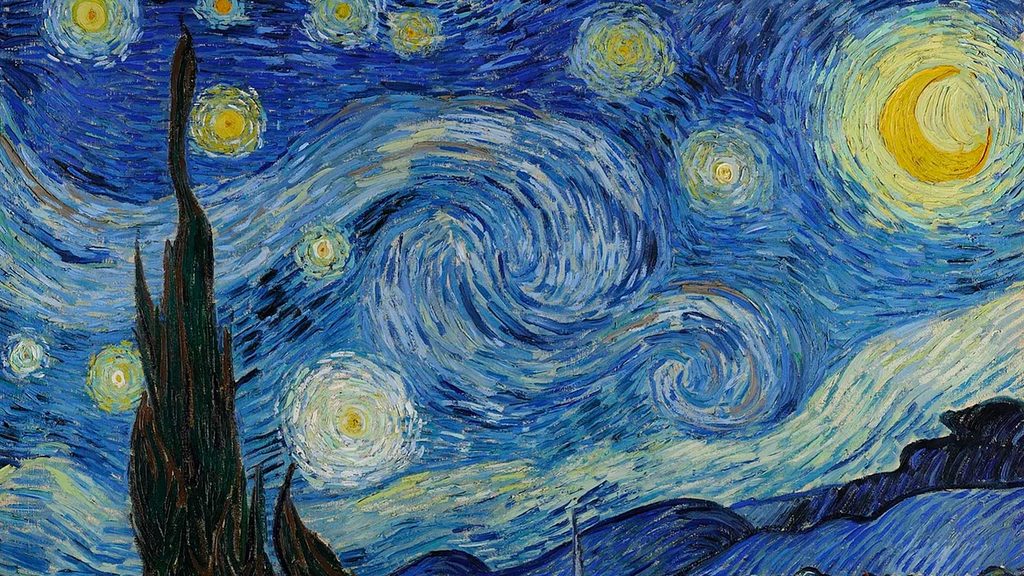
However, The Starry Night is not simply a faithful record of that view. Van Gogh combined elements he had observed with others drawn from memory and imagination.
The village, for instance, does not reproduce the exact landscape visible from his window. He also painted the work indoors, rather than standing outside beneath the night sky.
A world that seems to obey different laws.
The sky occupies most of the canvas, filled with enormous swirling movements. The stars appear surrounded by halos of yellow and white, while the moon glows above the village. Below, the dark silhouettes of the mountains create a contrast with the extraordinary energy of the sky.
A tall cypress tree rises from the foreground, almost connecting the earth with the heavens. It is difficult not to feel that something enormous is happening above this quiet village.
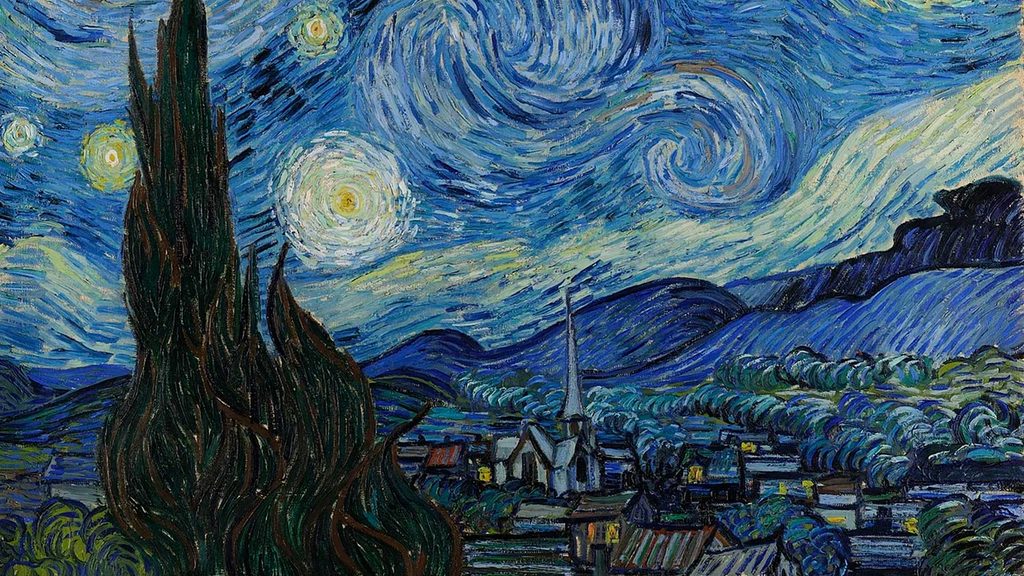
Yet Van Gogh did not simply invent these movements out of nowhere. He carefully studied the appearance of the sky, experimented with colour and used his imagination to transform what he had observed. His reading also influenced his vision. In particular, poetry by Walt Whitman encouraged him to think about the stars, eternity and the relationship between human beings and the universe.
The painting therefore brings together two different worlds: the physical world that Van Gogh observed and the emotional world that he wanted to express.
Van Gogh was not satisfied with his Starry Night
In a letter to the painter Émile Bernard, he described his attempt to paint the stars as a “new failure”, feeling that he had made them too large. He could hardly have imagined that this particular failure would eventually become one of the most recognisable images in modern art.
Perhaps that is another reason the painting remains so compelling. It does not offer us a realistic representation of the universe. Instead, it gives us the sensation of standing beneath something infinitely larger than ourselves.
Why Van Gogh’s night paintings were revolutionary
Van Gogh did not invent the idea of painting at night. Artists had explored moonlit landscapes, candlelit interiors and nocturnal city scenes for centuries. What made his approach distinctive was the way he transformed colour into an expressive language.
Before him, darkness often served as a backdrop against which artists placed their subjects. Van Gogh turned that relationship around. Darkness itself became the subject, something he could construct through colour, movement and contrast.
His approach rested on three important ideas
First, darkness did not require black. Blues, violets and greens could create depth, while yellows and oranges could suggest artificial light. The absence of sunlight did not mean the absence of colour.
Second, colour could express emotion. A red wall could feel oppressive, a blue sky could suggest infinity and a yellow lamp could create warmth or unease depending on its surroundings. Colour no longer needed to reproduce reality exactly. It could interpret it.
Finally, observation and imagination could work together. Van Gogh studied the world carefully, but he never believed that painting had to reproduce it mechanically. He could alter proportions, intensify contrasts and reorganise a landscape to reveal something that a simple visual record might miss.
This is why his night scenes feel so different from one another. Each painting offers a different emotional experience, even when the subject remains the same.
Van Gogh did not paint the night, he painted what it feels like
Perhaps the most interesting thing about Van Gogh’s nocturnal paintings is that they tell us very little about darkness itself. Instead, they tell us about the people who experience it.
Think about it. The same night can mean completely different things depending on where we are and who we are with. It can be the end of a long day, the beginning of a romantic evening, a moment of solitude or the setting for our most difficult thoughts.
Daylight tends to organise the world. It gives objects clear outlines, separates one thing from another and makes familiar places easy to recognise. Night, on the other hand, changes our relationship with what surrounds us. A street becomes a stage, a river becomes a mirror and a distant star becomes a reminder of how small we are.
Van Gogh understood that painting these scenes required more than technical skill. It required a different way of looking.
And perhaps that is the real lesson Van Gogh left us: darkness is not always the opposite of light. Sometimes, it is where we discover colours we never knew existed.